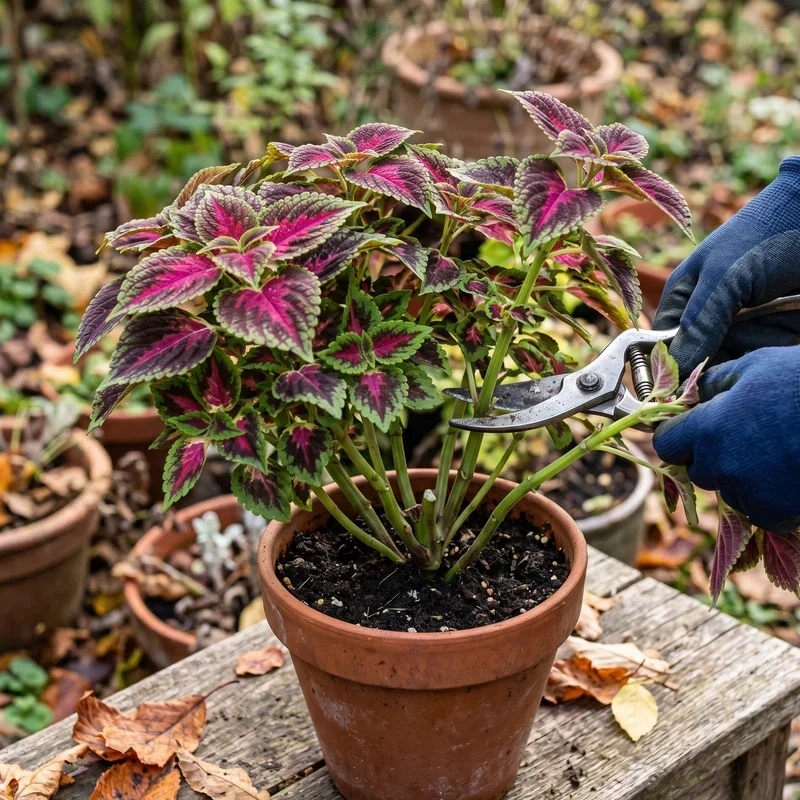
How to Cut Back Coleus for Winter Properly
Learn how to cut back coleus for winter properly with our complete guide to pruning, overwintering, and keeping plants thriving.
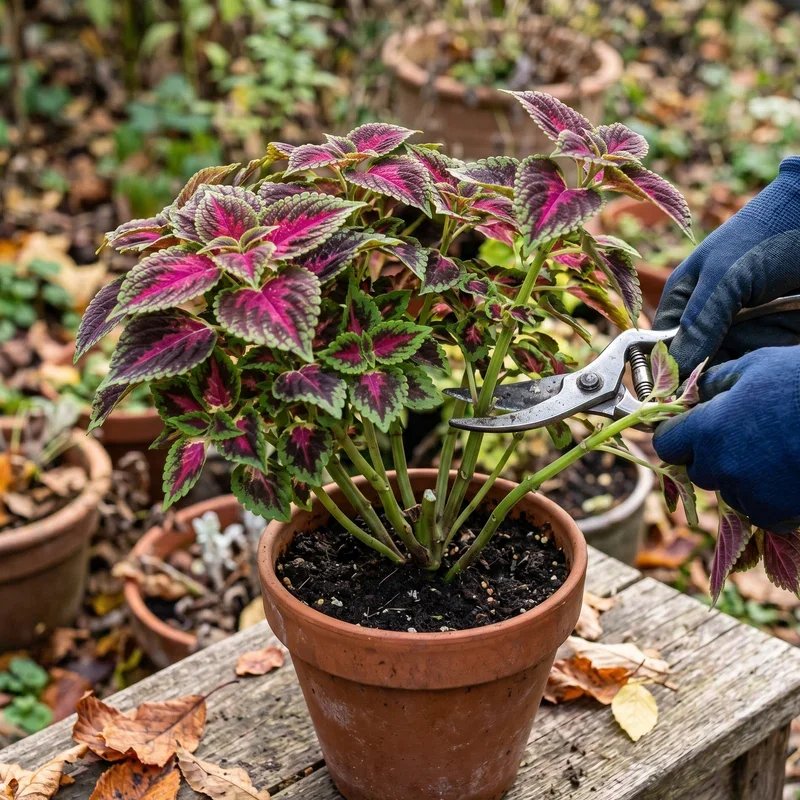
If you have ever grown coleus, you already know the heartbreak. You spend an entire summer watching those gorgeous, jewel-toned leaves fill out your garden beds and containers, and then autumn rolls around and suddenly everything starts looking sad. The temperatures drop, the leaves droop, and you are left wondering if all that beauty is just going to vanish until next spring.
Well, here is the good news. It does not have to. Learning how to cut back coleus for winter properly can mean the difference between losing your favorite plants forever and bringing them back year after year, bigger and bolder than before. And honestly, it is a lot easier than most people think.
Coleus are tropical perennials that most gardeners treat as annuals because they cannot handle frost. But with a little know-how and some strategic pruning, you can keep these vibrant beauties alive through the cold months and have a head start when warm weather returns. Whether you are planning to overwinter them indoors, take cuttings, or just prepare outdoor plants for the transition, this guide has got you covered from start to finish.
Why Coleus Need Special Attention Before Winter
Let us get one thing straight. Coleus are not built for cold weather. Period. They hail from tropical regions of Southeast Asia and Africa, where freezing temperatures simply do not exist. When the thermometer dips below 50 degrees Fahrenheit, coleus plants start throwing a fit. Their growth slows, leaves lose color, and prolonged exposure to cold can kill them outright.
That is precisely why cutting them back before winter matters so much. Without proper preparation, you are essentially leaving a tropical plant to fend for itself in conditions it was never designed to survive. It is like sending someone to Antarctica in flip-flops and a tank top. Not going to end well, right?
Cutting back coleus accomplishes several things at once. It reduces the plant's energy demands during a period when resources are scarce. It removes leggy, weak growth that will not survive anyway. And it encourages the plant to focus its remaining energy on the root system and core structure, which are crucial for surviving dormancy and bouncing back in spring.
Beyond survival, there is a practical benefit too. A properly pruned coleus takes up much less space, making it far easier to bring indoors or tuck into a sunny window for the winter months. Nobody wants a sprawling, three-foot-wide plant hogging their kitchen counter from November to March.
When Is the Right Time to Cut Back Coleus?
Timing is everything when it comes to winter prep, and jumping the gun or waiting too long both cause problems. So when exactly should you reach for those pruning shears?
The sweet spot is about two to three weeks before your first expected frost date. This gives the plant enough time to recover from the pruning stress and redirect its energy before the cold really sets in. In most parts of the United States, that means sometime between mid-September and late October, depending on your growing zone.
Keep an eye on your local weather forecast rather than relying solely on calendar dates. Mother Nature does not always stick to the schedule, and an unexpected early frost can catch unprepared gardeners off guard. If nighttime temperatures are consistently dropping below 55 degrees, that is your cue to get moving regardless of what the calendar says.
One common mistake is waiting until the plant already looks damaged from cold. By that point, you are doing triage rather than prevention. The whole idea is to prepare the plant while it is still healthy and vigorous enough to handle the transition.
How to Cut Back Coleus for Winter Properly: A Step-by-Step Approach
Alright, let us get into the nitty-gritty. Here is exactly how to cut back coleus for winter properly, broken down into manageable steps that anyone can follow.
Step One: Gather Your Tools
Before you start hacking away at your plants, make sure you have got the right equipment on hand. You will need a pair of sharp, clean pruning shears or scissors, rubbing alcohol or a diluted bleach solution for sterilizing, a spray bottle with water, small pots with fresh potting mix if you plan to root cuttings, and clear plastic bags or humidity domes if propagating.
Sharp tools are non-negotiable here. Dull blades crush plant stems instead of cutting them cleanly, which creates ragged wounds that invite disease and slow healing. Take two minutes to sharpen or replace your shears before you begin. Your coleus will thank you.
Step Two: Assess Each Plant
Not every coleus in your garden needs the same treatment. Walk through and evaluate each plant individually. Look for signs of disease, pest damage, or excessive legginess. Healthy plants with strong root systems are your best candidates for overwintering. Plants that are already struggling might not be worth the effort, and that is perfectly okay.
Check for any flower spikes too. If your coleus has started blooming, that is actually a sign of stress. The plant is trying to reproduce before it dies, which is its natural response to shortening days and cooling temperatures. Pinching off flower spikes redirects energy back into leaf and root production.
Step Three: Make Your Cuts
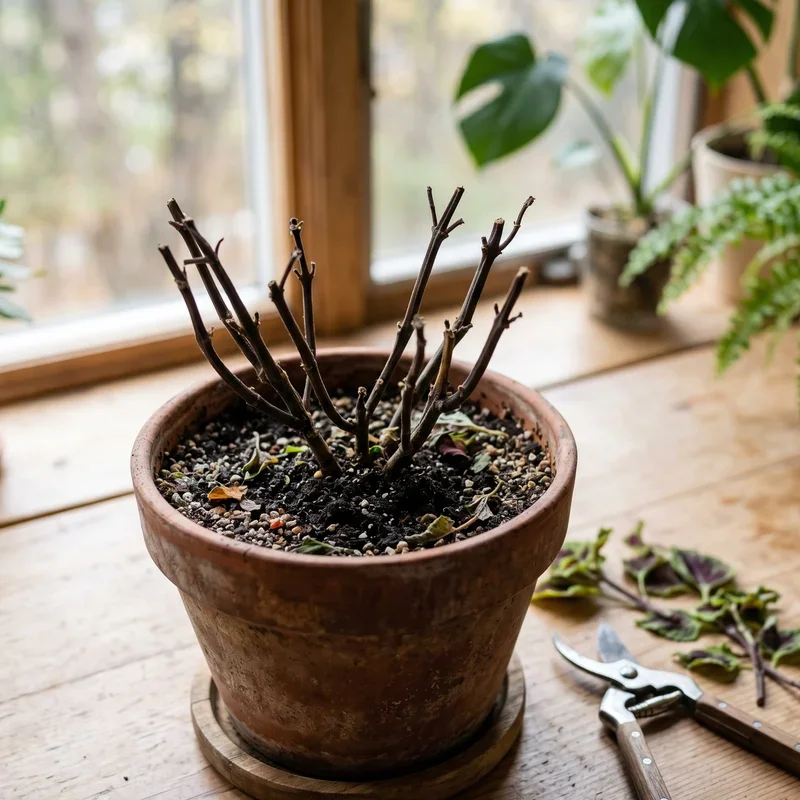
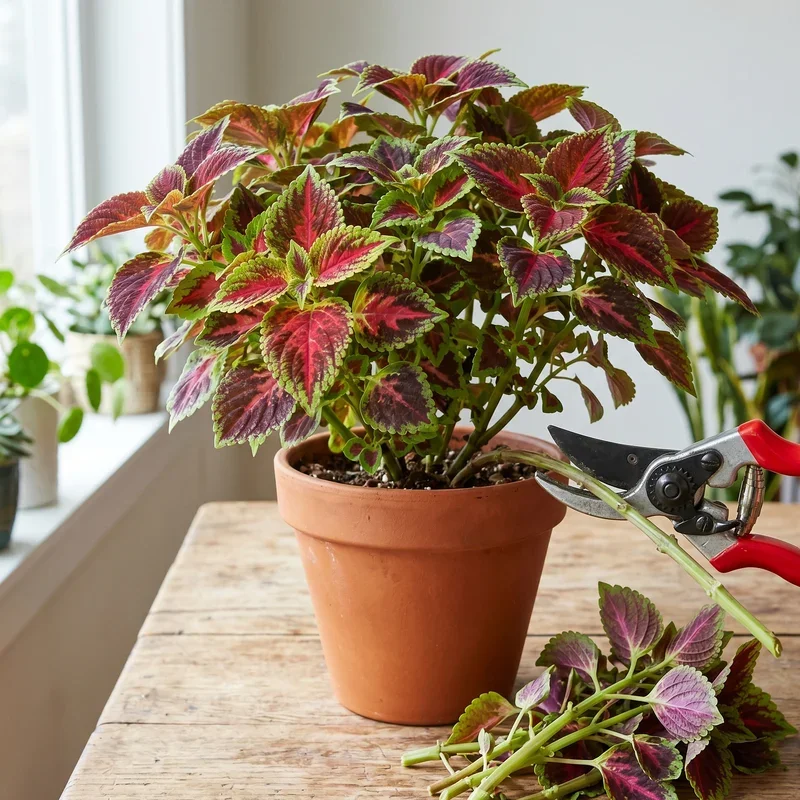
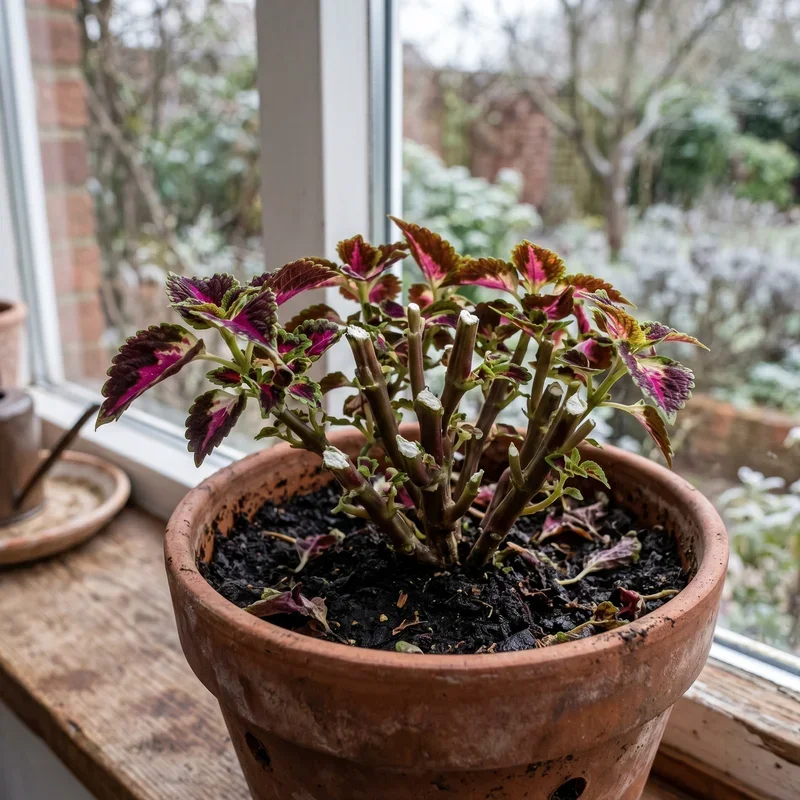
Here is where the real action happens. For plants you plan to bring indoors whole, cut the entire plant back by about one-third to one-half of its total height. Make each cut just above a leaf node, which is the point where leaves or branches emerge from the main stem. Cutting at the node encourages new branching and bushier regrowth.
Remove any yellowing, damaged, or particularly thin and weak stems entirely. These are just sapping energy from the rest of the plant without contributing anything useful. Be decisive about it. Gardening is no place for sentimentality when it comes to pruning.
For plants that are too large to bring indoors, take cuttings from the healthiest portions instead. Cut four to six inch sections from the stem tips, making sure each cutting has at least three to four sets of leaves. Strip the lower leaves from each cutting, leaving just the top two sets. This reduces moisture loss and gives you a clean stem to root.
Step Four: Treat and Transition
After cutting, lightly mist the remaining plant with water and allow the cut wounds to dry for a few hours before making any moves. If you are bringing potted coleus indoors, gradually transition them over the course of a week. Move them to a shadier outdoor spot first, then to a covered porch, and finally indoors. This gradual adjustment prevents shock from the sudden change in light and temperature.
For cuttings, place them in water or moist potting mix immediately after cutting. Water propagation lets you watch the roots develop, which is oddly satisfying if you ask me. Change the water every few days to keep it fresh and prevent bacterial growth. Roots typically appear within one to two weeks.
Overwintering Indoor Coleus: What to Expect
Bringing coleus inside for winter is not exactly the same as growing them during summer. The conditions are different, and your care routine needs to adjust accordingly.
Light Requirements
Coleus need bright, indirect light to maintain their color and stay compact indoors. A south-facing or west-facing window is ideal. Without enough light, stems stretch out and become leggy, and those vivid leaf colors fade to washed-out greens. If natural light is limited in your home, a simple grow light running for 12 to 14 hours a day solves the problem beautifully.
Watering Adjustments
Indoor coleus need less water than their outdoor counterparts because growth slows significantly during winter. Let the top inch of soil dry out between waterings. Overwatering is the number one killer of indoor coleus during winter, so err on the side of too dry rather than too wet. Soggy roots in cool conditions lead to root rot faster than you can say "compost bin."
Temperature and Humidity
Keep indoor coleus in a room that stays between 60 and 75 degrees Fahrenheit. Avoid placing them near drafty windows, heating vents, or exterior doors where temperatures fluctuate wildly. Tropical plants despise temperature swings, and coleus are no exception.
Humidity is another factor that gets overlooked. Winter indoor air tends to be dry, especially if you are running central heating. Grouping plants together, using a pebble tray filled with water beneath the pots, or running a small humidifier nearby all help maintain the moisture levels that coleus crave.
Fertilizing During Winter
Here is a hot take that some gardeners disagree with, but I stand by it. Do not fertilize your coleus during winter. The plant is in a rest period, and pushing growth with fertilizer creates weak, spindly stems that are more trouble than they are worth. Resume feeding in early spring when you notice new, vigorous growth emerging. A half-strength balanced liquid fertilizer every two weeks is plenty once growth picks back up.
Propagating Coleus Cuttings for Winter Survival
Taking cuttings is hands down the most popular method for preserving coleus over winter, and for good reason. It is simple, it works reliably, and it gives you multiple new plants from a single parent.
Water Propagation Method
Place your prepared cuttings in a glass or jar of clean water, making sure the stripped stem nodes are submerged but the remaining leaves stay above the waterline. Set the jar in a bright spot out of direct sunlight. Direct sun can heat the water and cook those tender new roots before they even get started.
Within seven to fourteen days, you should see white roots emerging from the submerged nodes. Once the roots reach about two inches long, the cuttings are ready to pot up in soil. Do not leave them in water indefinitely. Water-grown roots are different from soil-grown roots, and the longer you wait, the harder the transition becomes.
Soil Propagation Method
If you prefer skipping the water stage entirely, cuttings root perfectly well directly in moist potting mix. Dip the cut end in rooting hormone powder, though this is optional and not strictly necessary. Stick the cutting about two inches deep into a small pot of pre-moistened potting mix, and press the soil firmly around the stem.
Cover the pot with a clear plastic bag or humidity dome to trap moisture around the cutting. This creates a mini greenhouse effect that keeps humidity high and prevents the cutting from wilting before roots develop. Remove the cover for a few minutes each day to allow air circulation and prevent mold growth.
Check for rooting by gently tugging on the cutting after two weeks. If you feel resistance, congratulations, roots have formed. Remove the cover permanently at that point and treat it as a regular houseplant for the rest of winter.
Common Problems When Overwintering Coleus
Even with the best preparation, things can go sideways during the winter months. Knowing how to cut back coleus for winter properly is just the first piece of the puzzle. Here are the most frequent issues and how to handle them.
Leggy, Stretched Growth
This almost always means insufficient light. Move the plant closer to a window or add supplemental lighting. Pinch back the leggy growth to encourage bushier form. Do not be shy about pinching. Coleus respond incredibly well to regular pinching throughout the winter, and each pinch point produces two new branches.
Leaf Drop
Some leaf drop is normal during the transition period as the plant adjusts to lower light and different humidity levels. Excessive leaf drop, however, signals a watering problem, usually overwatering. Check the soil moisture and adjust your schedule. Yellow leaves before dropping typically mean too much water, while crispy, brown-edged leaves suggest not enough humidity.
Pest Infestations
Indoor conditions can bring out pests that were not an issue outdoors. Aphids, mealybugs, spider mites, and whiteflies all love the warm, dry conditions of a heated home. Inspect your plants regularly, paying close attention to the undersides of leaves and where stems meet branches. A strong spray of water knocks off mild infestations, and insecticidal soap handles more persistent problems.
Root Rot
The silent killer of overwintering plants. Root rot starts below the soil surface where you cannot see it, and by the time aboveground symptoms appear, significant damage is already done. Prevention is key here. Use well-draining potting mix, pots with drainage holes, and a restrained watering schedule. If you catch it early, repot the plant in fresh, dry soil after trimming away any mushy, blackened roots.
Preparing Overwintered Coleus for Spring
When longer days and warmer temperatures arrive in spring, your overwintered coleus needs another transition period before heading back outside. Start by increasing water and light exposure gradually about four to six weeks before your last expected frost date.
Begin fertilizing again with a half-strength balanced fertilizer, increasing to full strength as the plant shows strong new growth. Prune back any leggy winter growth to shape the plant and encourage a full, bushy form for the upcoming growing season.
Harden off the plants over seven to ten days before moving them outdoors permanently. Start with a couple of hours in a shaded outdoor spot, gradually increasing sun exposure and outdoor time each day. Rushing this process causes sunburn and shock, which sets the plant back weeks.
Once nighttime temperatures consistently stay above 55 degrees, your coleus can go back outside for good. And honestly, watching a plant you nursed through the entire winter explode with fresh, colorful growth is one of the most rewarding feelings in gardening. Worth every bit of effort.
Conclusion
Knowing how to cut back coleus for winter properly transforms these tropical stunners from disposable annuals into long-lived perennials that return bigger and better every year. Start pruning a few weeks before frost, take healthy cuttings or bring whole plants indoors, and provide consistent care through the cold months. With the right timing, clean cuts, and a little patience during the indoor season, your coleus collection will not just survive winter but thrive when spring finally comes back around.
Read next: 15 Winter Library Display Ideas for Cozy Seasonal Decor
Frequently Asked Questions
1.Can coleus survive winter outdoors in cold climates?
No, coleus cannot tolerate frost and will die if left outside in freezing temperatures.
2.How far back should I cut coleus before winter?
Cut plants back by one-third to one-half their height above healthy leaf nodes.
3.Can I root coleus cuttings in water during winter?
Yes, coleus cuttings root easily in water within seven to fourteen days on average.
4.Do coleus need fertilizer during winter months?
No, skip fertilizing during winter dormancy and resume feeding again in early spring.
5.When should I move overwintered coleus back outside?
Move coleus outdoors after the last frost when nighttime temperatures stay above 55 degrees.
Stay up to date with our latest ideas!