15 Easter Classroom Door Ideas for Festive Decor
Transform your classroom with creative Easter door decorations that delight students and celebrate spring with bunnies, eggs, and colorful themes.
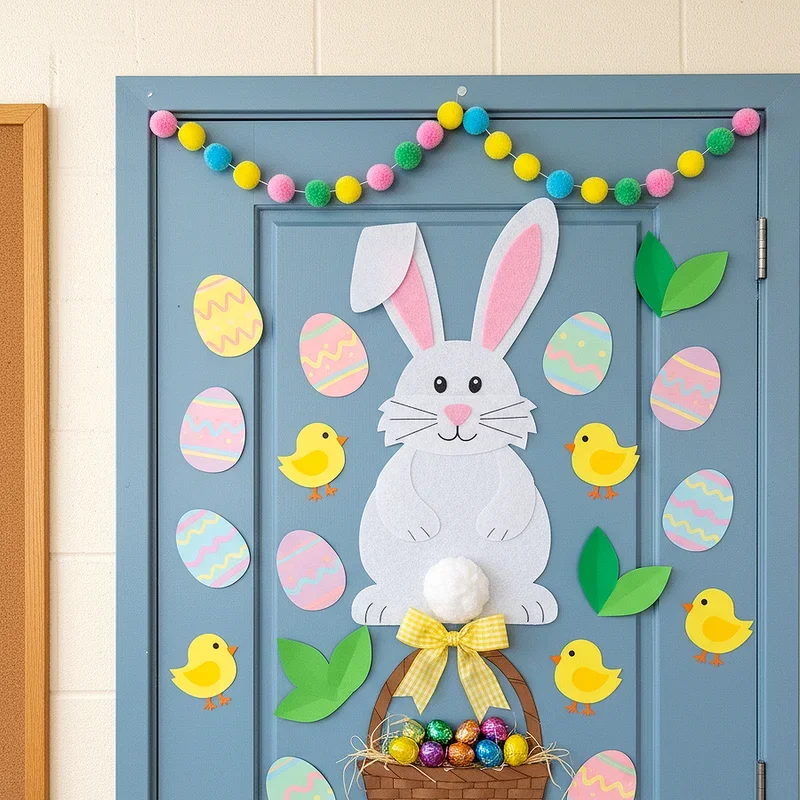
Spring has arrived, and Easter brings the perfect opportunity to transform your classroom door into a vibrant celebration of renewal and joy. Have you ever noticed how a festively decorated door can instantly lift spirits and create excitement among students? Your classroom door serves as the first impression, a welcoming gateway that sets the tone for the learning environment inside. Easter decorations offer endless possibilities for creativity, from adorable bunny characters to colorful egg displays that capture the essence of spring. These decorations do more than beautify your space; they create memorable experiences that students will cherish long after the holiday passes. Whether you're working with a tight budget or have resources to spare, transforming your classroom door into an Easter masterpiece is achievable and rewarding.
1. Bunny Burrow Entrance
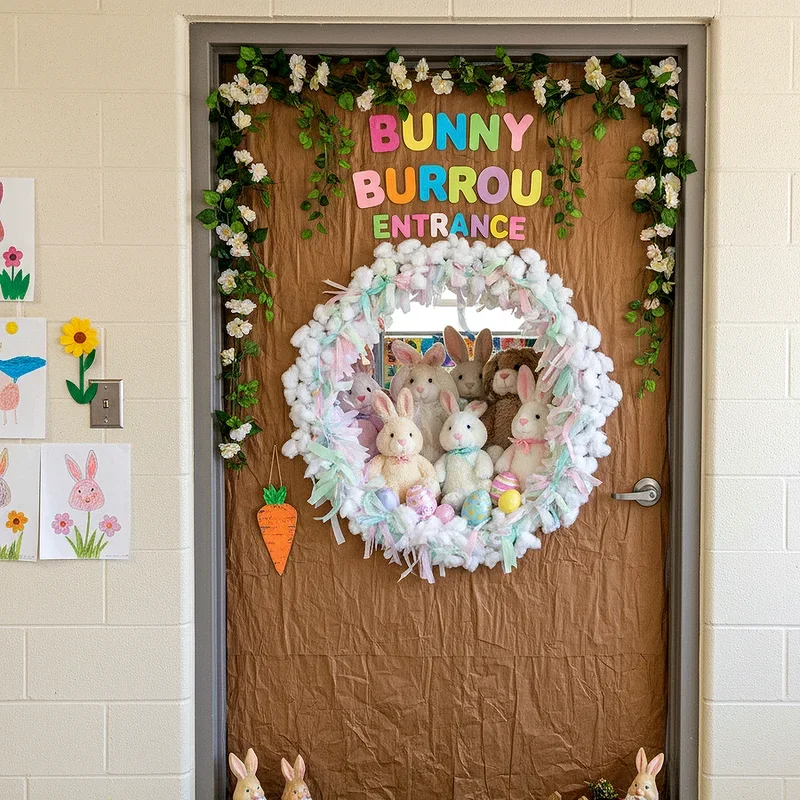
Transform your classroom door into an enchanting bunny burrow that invites students to hop right into learning. This design creates the illusion that your doorway leads directly into a cozy underground rabbit home, complete with dirt walls and tunnel effects. Use brown craft paper to cover the door frame, creating texture with crumpled paper to simulate earth and roots. Add a large bunny silhouette peeking from one corner, perhaps holding a carrot or book to tie in educational themes. Students will feel like they're entering a magical storybook world each time they walk through. The beauty of this design lies in its dimensional appeal and the sense of adventure it creates. You can enhance the effect with cotton ball clouds above the burrow entrance or grass sprouting from the top edge.
2. Giant Easter Egg Display
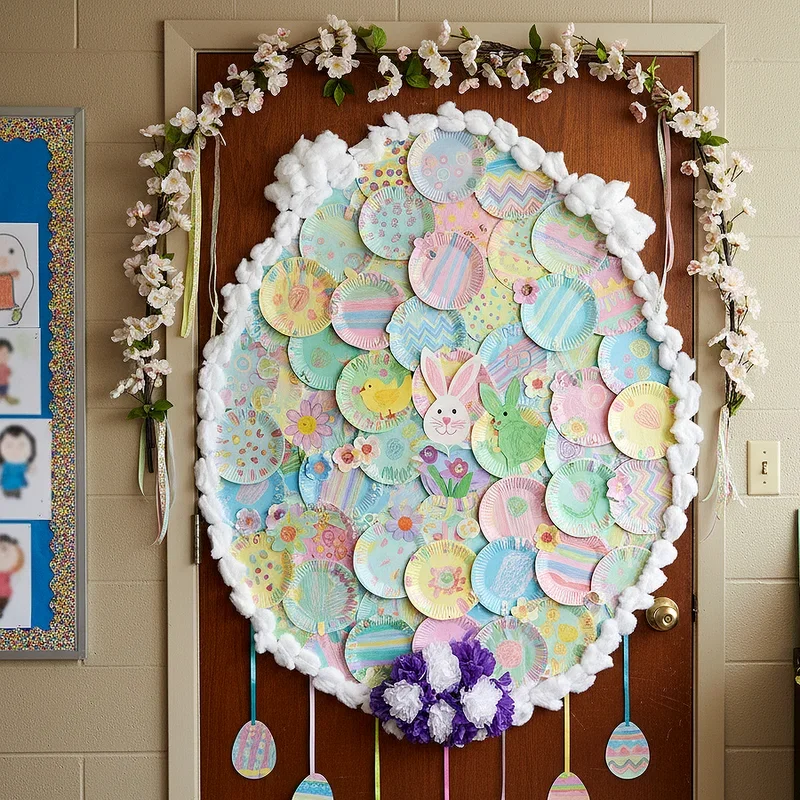
Create a stunning focal point by transforming your entire door into one massive, decorated Easter egg that showcases intricate patterns and vibrant colors. This bold approach makes an immediate visual impact and offers endless customization opportunities to match your classroom theme or school colors. Cover the door with bright background paper, then use various materials like tissue paper, paint, ribbons, or construction paper to create elaborate designs. Consider incorporating patterns like zigzags, polka dots, stripes, or floral motifs that reflect traditional Easter egg decoration techniques. You might even involve students in the creative process by having each child design a small section that contributes to the overall pattern. This collaborative approach teaches teamwork while building excitement about the finished product and creating ownership among students.
3. Carrot Patch Garden Scene
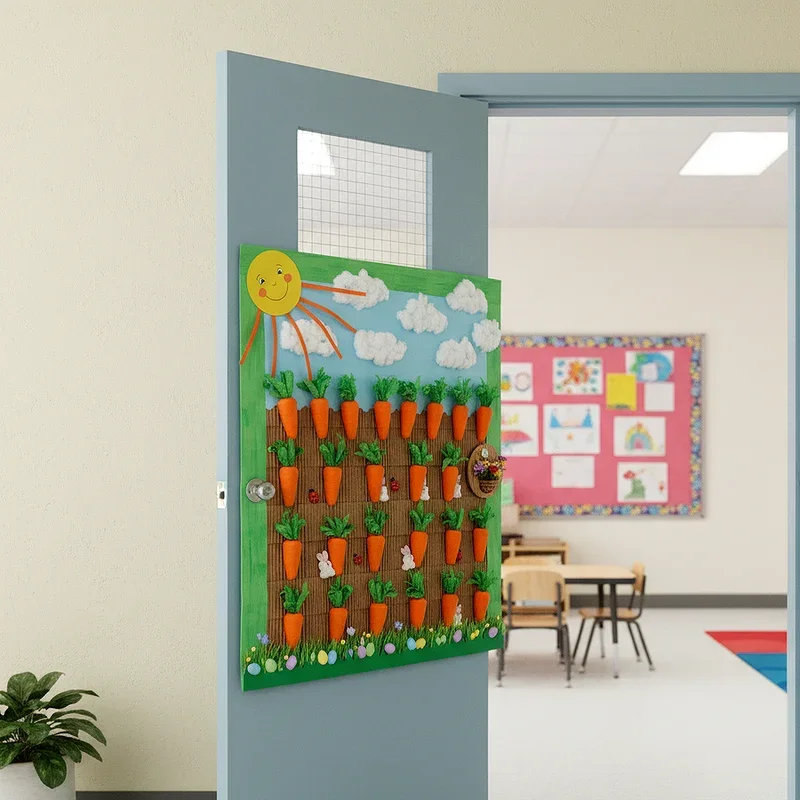
Bring the Easter bunny's favorite snack to life with a charming carrot patch that covers your classroom door in delightful vegetable abundance. This agricultural theme celebrates spring planting season while incorporating Easter elements through bunny characters harvesting or munching on the orange vegetables. Create rows of carrots using orange construction paper with green paper shred or streamers for leafy tops, arranging them at various heights to suggest a thriving garden. Add dimension by layering some carrots closer to the viewer and others farther back, creating depth and visual interest. A cute bunny character can peek from behind the carrots or sit contentedly with a basket full of the harvest. This design offers educational opportunities to discuss gardening, healthy eating, or the life cycle of plants while celebrating Easter festivities.
4. Easter Basket Overflowing with Goodies
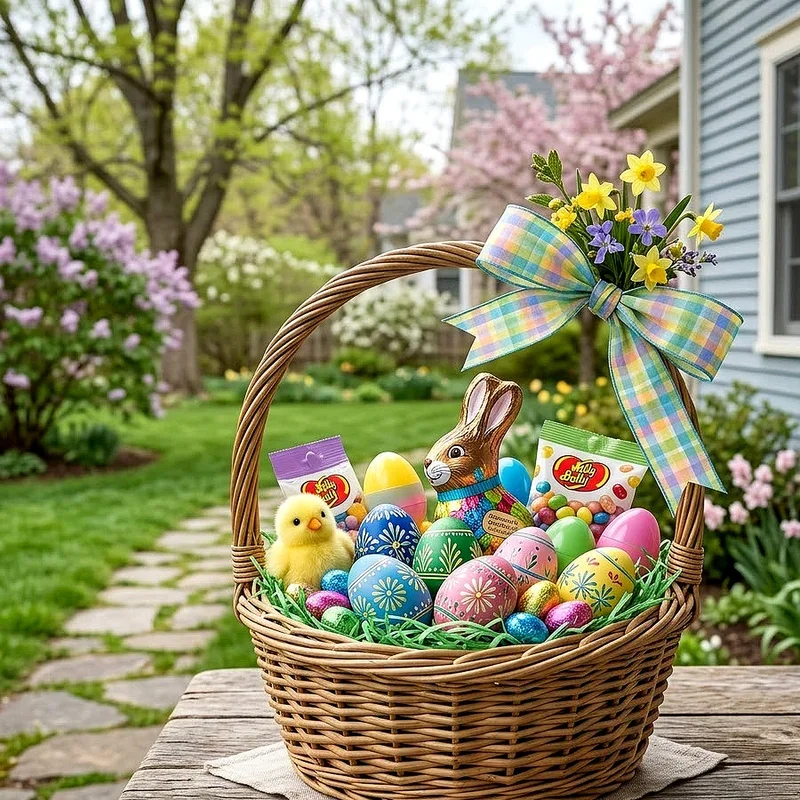
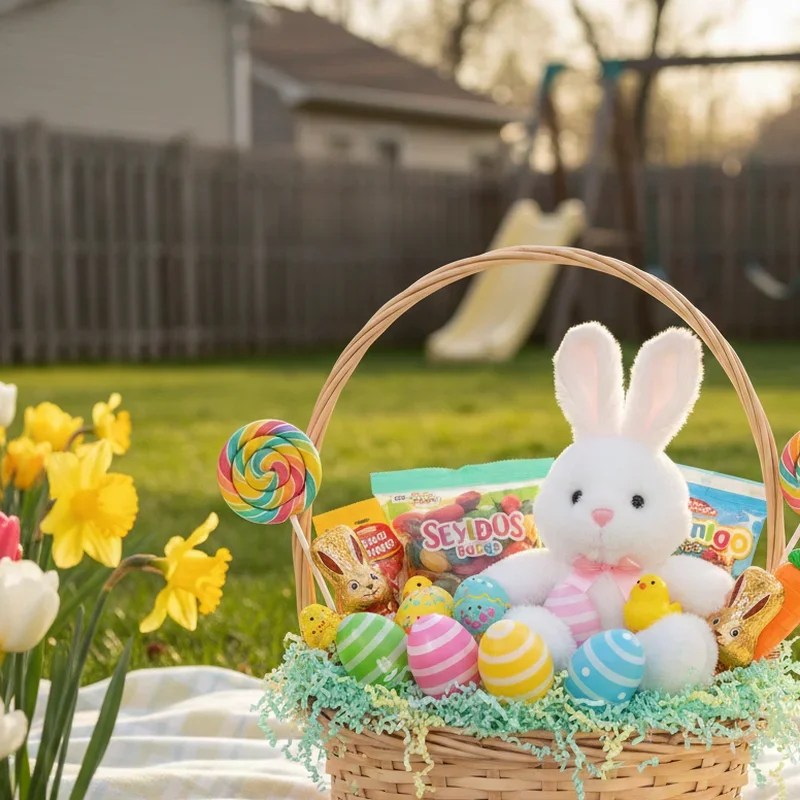
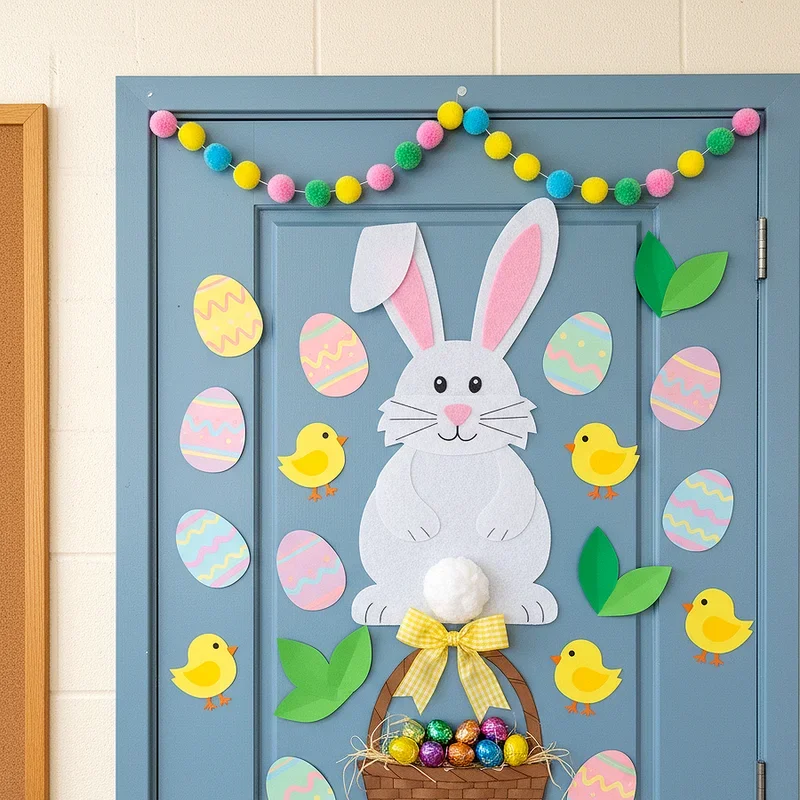
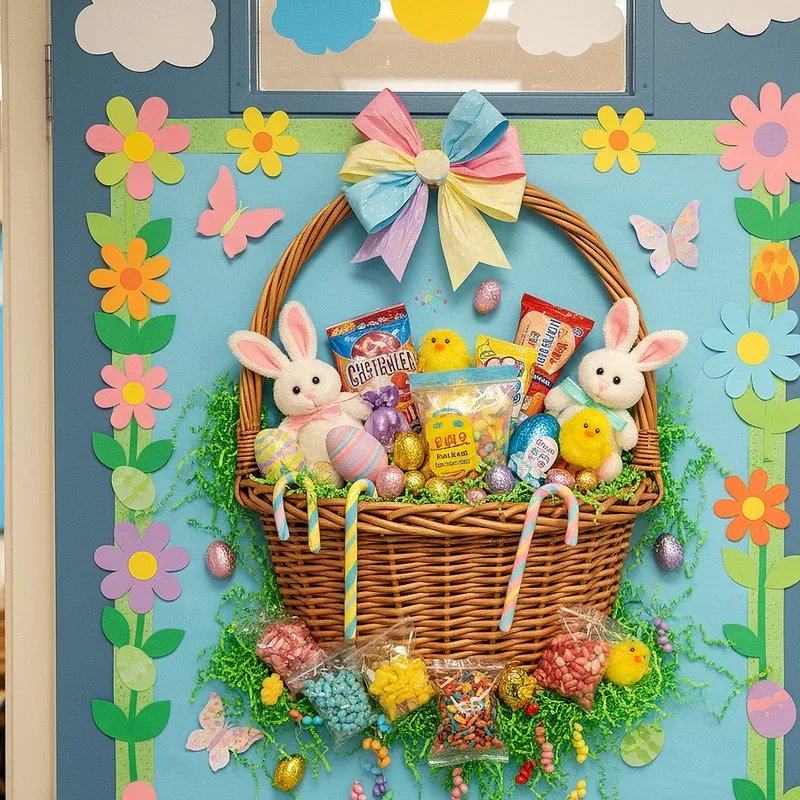
Design your door to resemble a magnificent Easter basket bursting with colorful eggs, candy, and springtime treats that capture the holiday's generous spirit. Position a large woven basket shape at the bottom of the door, using brown paper strips to create the classic basket weave texture that provides authentic detail. Fill the basket to overflowing with paper Easter eggs in every imaginable pattern, plastic grass streaming over the edges, and perhaps some wrapped candy shapes. The key to this design's success lies in creating abundance and movement, with elements appearing to spill joyfully beyond the basket's confines. Add a large decorative bow at the basket handle using ribbon or paper, choosing colors that complement your overall scheme. This design naturally lends itself to incorporating student participation through contributed decorated eggs.
5. Bunny Peeking Through Door
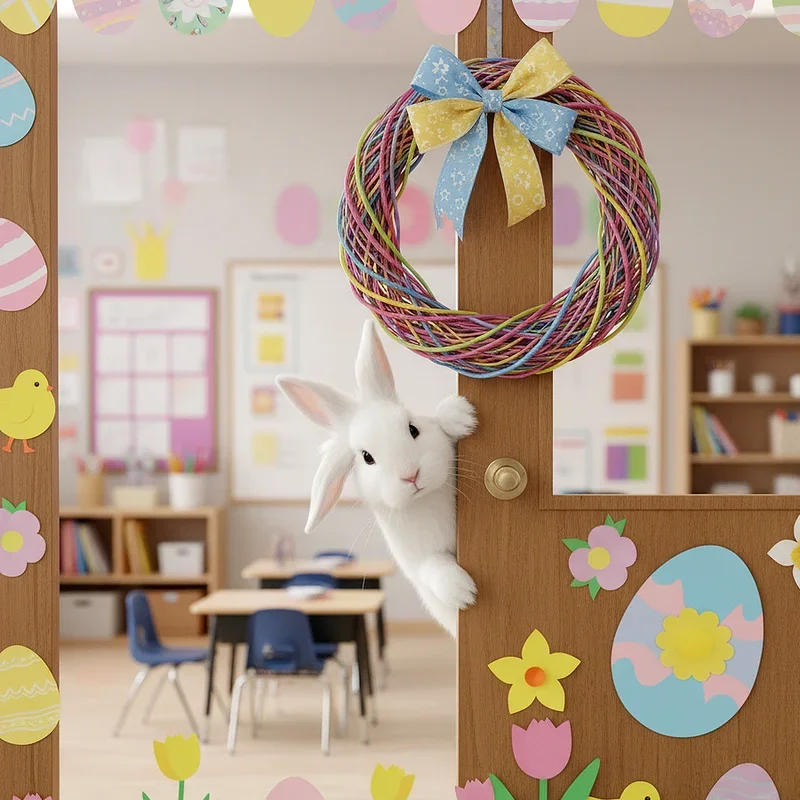
Create an adorable and playful scene featuring a life-sized bunny who appears to be peeking around the edge of your classroom door, as if checking whether it's safe to enter. This design brings personality and charm through the bunny's curious expression and body language that suggests movement and interaction. Position the bunny's face and paws emerging from one side of the door frame, with perhaps just the tips of ears visible at the top. Use white or pastel-colored paper for the body, adding pink details for the nose, inner ears, and paw pads that provide realistic touches. The bunny's eyes should be large and engaging, perhaps looking directly at viewers to create connection and welcome. You can add thought bubbles with Easter messages or educational content, turning the decoration into an interactive teaching tool that welcomes students warmly.
6. Spring Flower Garden
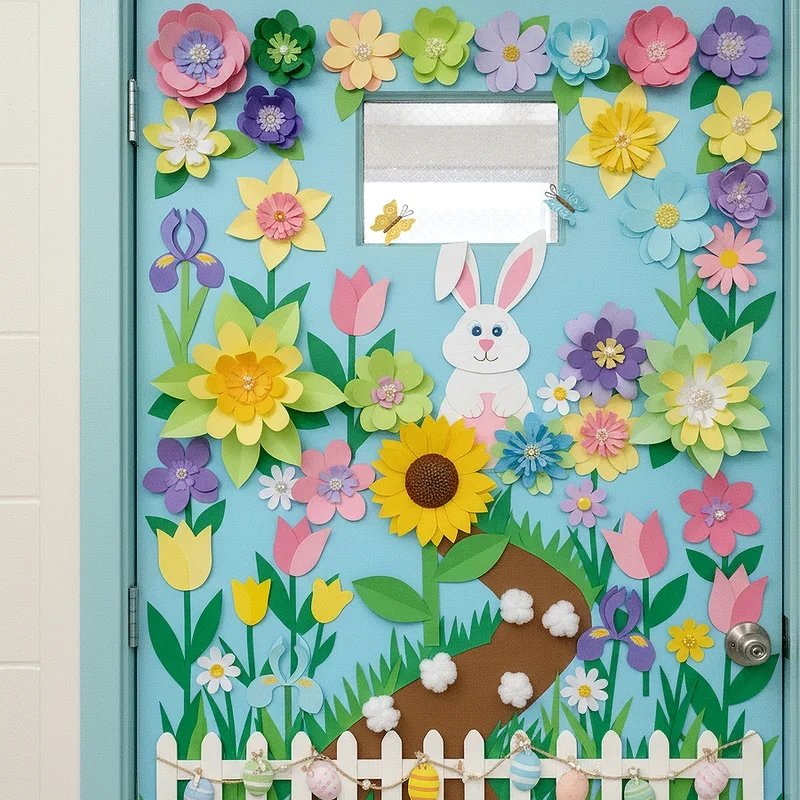
Celebrate Easter's connection to spring's arrival by transforming your door into a breathtaking flower garden bursting with colorful blooms that herald the season's renewal. This design moves beyond traditional Easter symbols to embrace the broader theme of spring awakening and natural beauty returning to the world. Cover your door with a sky blue background, then create an abundance of flowers using various materials like tissue paper, cupcake liners, construction paper, or even real pressed flowers laminated for preservation. Include different flower varieties at various heights, from tall tulips and daffodils to shorter violets and crocuses, creating visual diversity and interest. Add green stems and leaves, perhaps including grass along the bottom edge and a few butterflies or bees pollinating the blooms. Students can contribute by creating their own flowers to add.
7. Hatching Chicks Theme
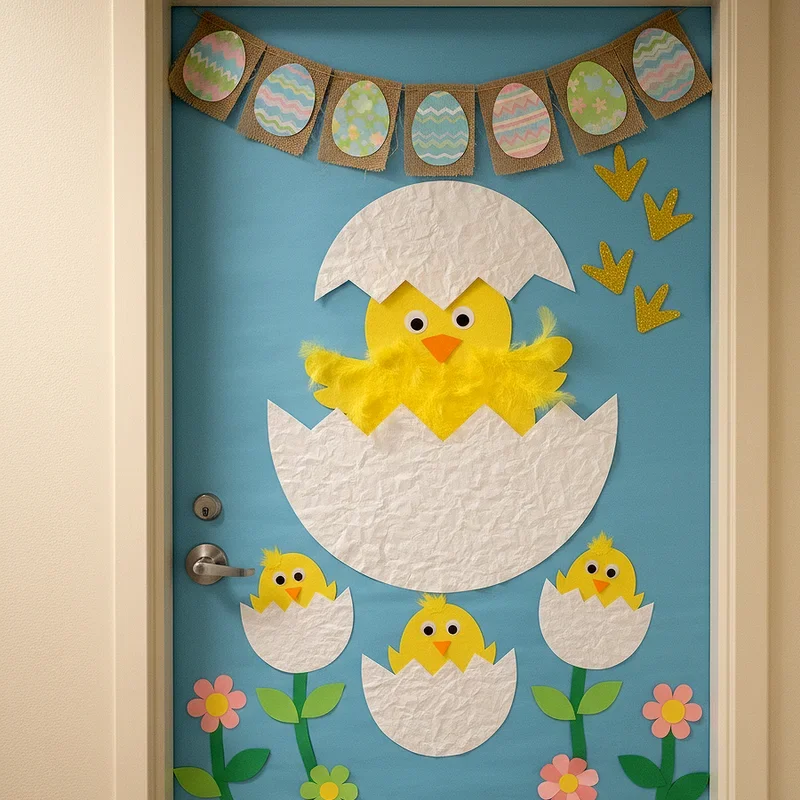
Capture the essence of new beginnings with an irresistibly cute display of baby chicks breaking free from their Easter eggs in various stages of emergence. This theme beautifully symbolizes growth, transformation, and the fresh starts that spring represents, making it both festive and meaningful. Create large egg shapes from white or pastel paper, then show them cracking open with fluffy yellow chicks peeking out, some timid and others bold. Use yellow pom-poms, feathers, or tissue paper to give the chicks dimensional texture that makes them appear soft and touchable. Add personality through different expressions and positions, perhaps including some chicks that have completely emerged and others just beginning their journey. Small details like orange beaks, tiny feet, and little wing stubs bring the characters to life beautifully.
8. Easter Egg Hunt Challenge
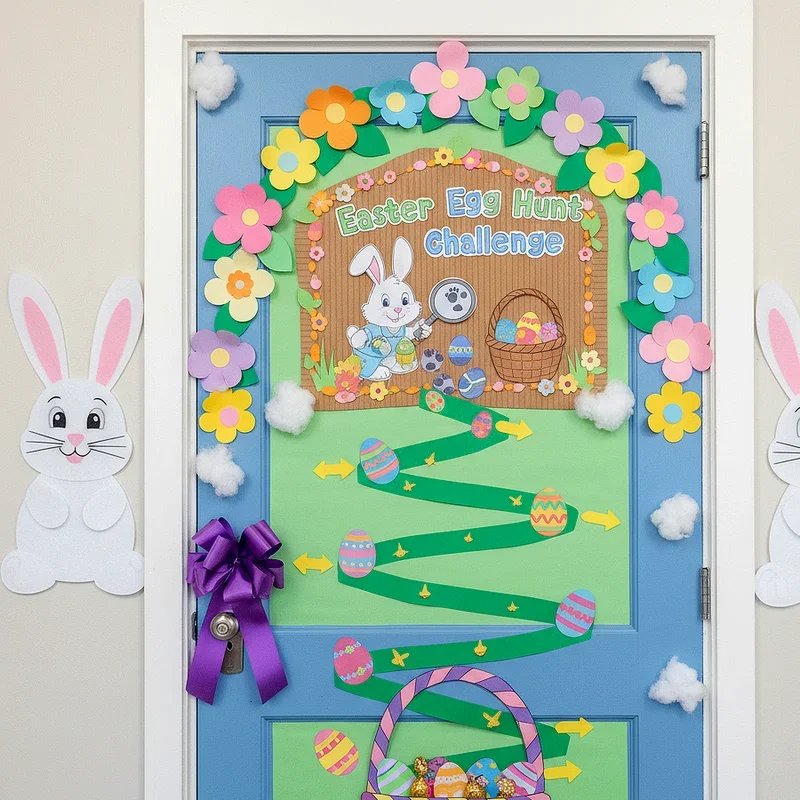
Engage students' observation skills and competitive spirit with an interactive door display that doubles as an ongoing Easter egg hunt game throughout the holiday season. This dynamic approach transforms passive decoration into active participation, keeping interest high and encouraging repeated engagement with the display. Hide numerous paper Easter eggs of various sizes throughout a busy scene on your door, perhaps a garden, forest, or village setting with plenty of nooks and crannies. Number each egg and create a corresponding checklist where students can mark off eggs as they locate them, perhaps earning small prizes for finding them all. Some eggs can be obvious while others require careful searching, accommodating different skill levels. This interactive element turns your door into a destination rather than just decoration, creating buzz and excitement.
9. Religious Resurrection Scene
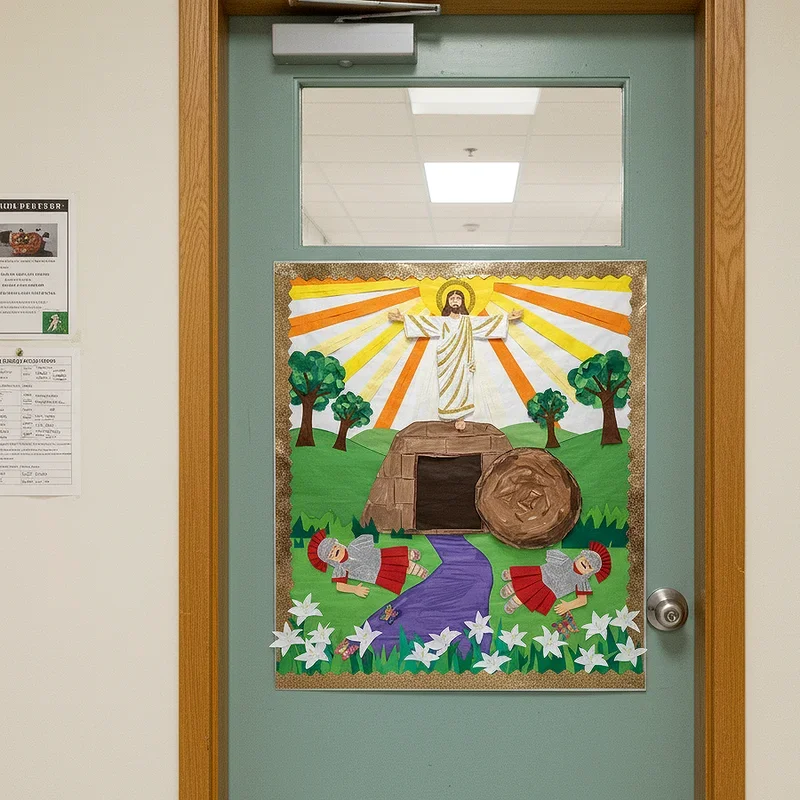
Honor the spiritual significance of Easter with a respectful and beautiful door display depicting the resurrection story that forms the foundation of the Christian holiday. This approach acknowledges the religious meaning behind Easter celebrations, making it appropriate for faith-based schools or diverse settings that include various holiday traditions. Create a sunrise scene with radiant beams of light emanating from behind a hill where an empty tomb stands open, symbolizing Christ's resurrection. Use warm oranges, yellows, and golds for the sunrise, contrasting with the cool stones of the tomb entrance. Add flowing white fabric or paper to suggest the grave clothes left behind, and perhaps include an angel figure announcing the miraculous event. Keep the design tasteful and age-appropriate, focusing on themes of hope, renewal, and joy while incorporating inspirational scripture verses.
10. Jelly Bean Explosion
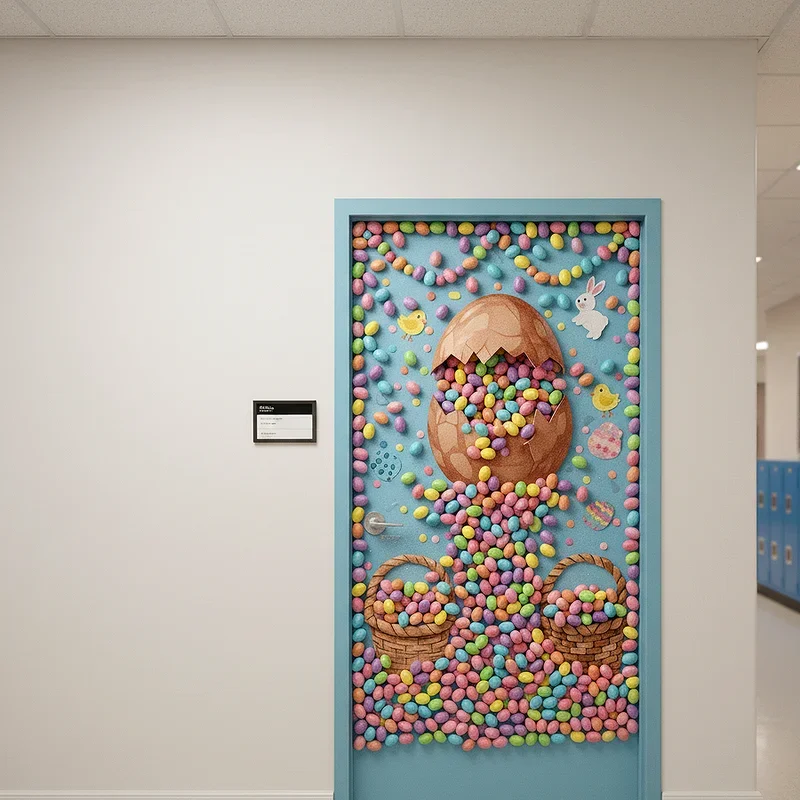
Delight students with a vibrant, candy-inspired door that celebrates the colorful sweetness of Easter through an explosion of jelly bean shapes in every imaginable hue. This playful design appeals to children's love of candy while creating a visually striking display that commands attention with pure color energy. Create hundreds of jelly bean shapes from construction paper in the full spectrum of colors, then arrange them as if bursting from a jar, bag, or simply exploding across the door surface. The key to this design's impact lies in color saturation and abundance, creating a kaleidoscope effect that dazzles the eye. You can incorporate learning by labeling jelly beans with vocabulary words, math facts, or inspirational messages that students can read as they admire the display. This design works wonderfully because it's simultaneously simple to execute yet incredibly effective.
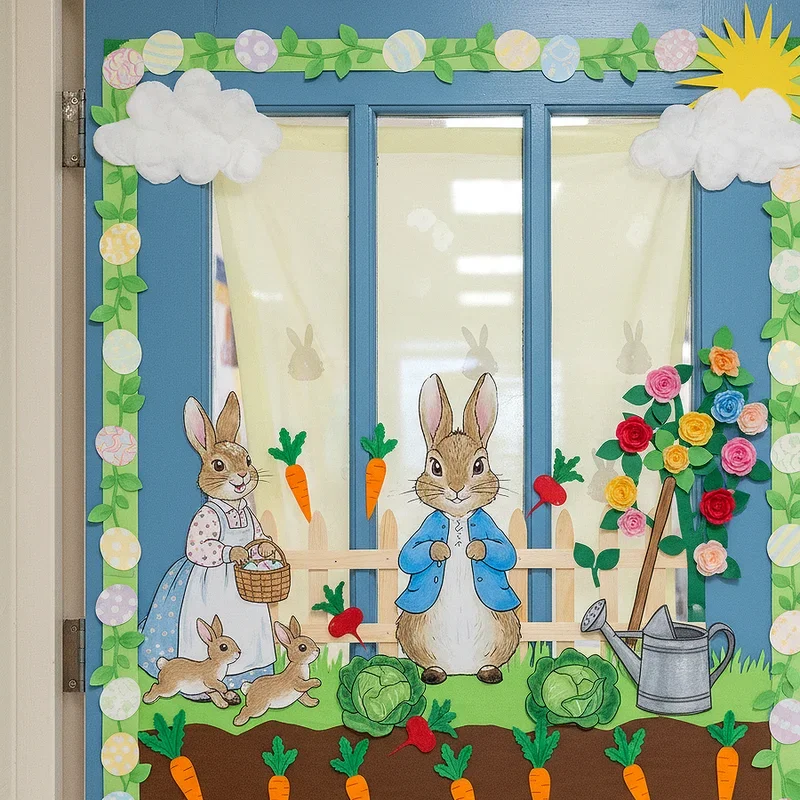
11. Peter Rabbit Storybook Theme
Bring beloved children's literature to life by recreating scenes from Beatrix Potter's classic Peter Rabbit tales on your classroom door, combining Easter celebration with literacy appreciation. This literary approach adds educational value to your decoration while honoring timeless stories that have enchanted generations of young readers. Design your door as an open storybook with pages showing Peter Rabbit's adventures in Mr. McGregor's garden, perhaps including his narrow escape through the fence or encounter with other animal characters. Use illustrations that capture Potter's distinctive watercolor style, or create simplified versions that maintain the charm of the original artwork. Add text excerpts from the story, encouraging students to read and engage with the narrative displayed before them. This theme naturally incorporates spring vegetables like lettuce and radishes that Peter famously nibbles.
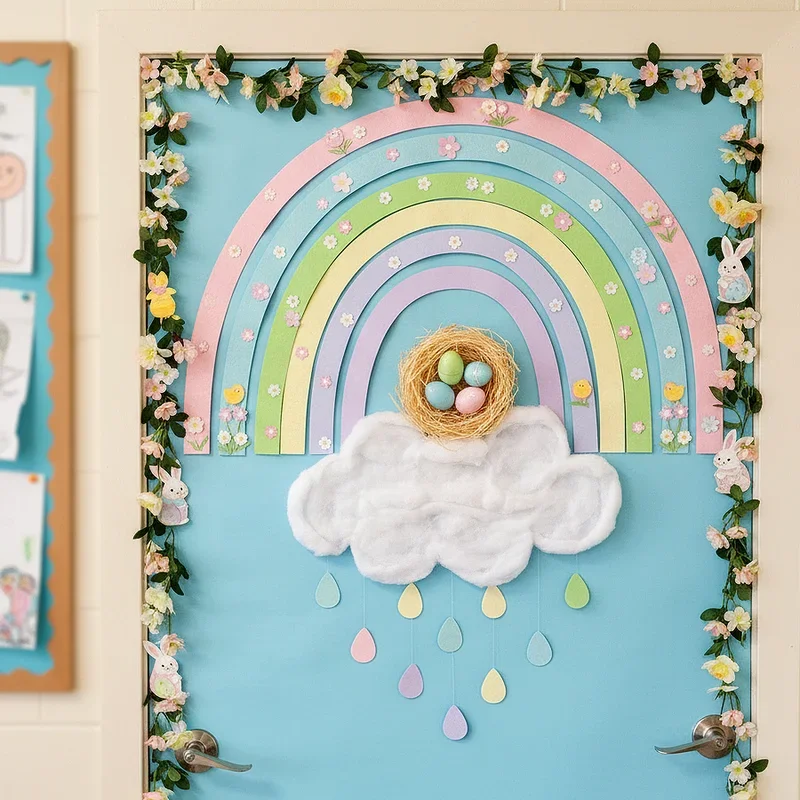
12. Pastel Rainbow Arch
Create a dreamy, whimsical entrance by designing a graceful rainbow arch made entirely of soft pastel colors that embody Easter's gentle, spring-inspired palette. This design offers abstract beauty rather than literal Easter symbols, making it versatile for diverse classrooms while maintaining seasonal appropriateness. Layer curved strips of paper in classic rainbow sequence, using soft shades of pink, lavender, mint, baby blue, lemon yellow, and peach rather than bold primary colors. The arch should frame your doorway, creating a symbolic passage through which students enter their learning space each day. Add fluffy white clouds at the rainbow's ends, perhaps constructed from cotton balls or crumpled tissue paper for dimensional texture. Consider including raindrops made from clear cellophane or iridescent paper that catch light and add sparkle to the display while symbolizing hope.
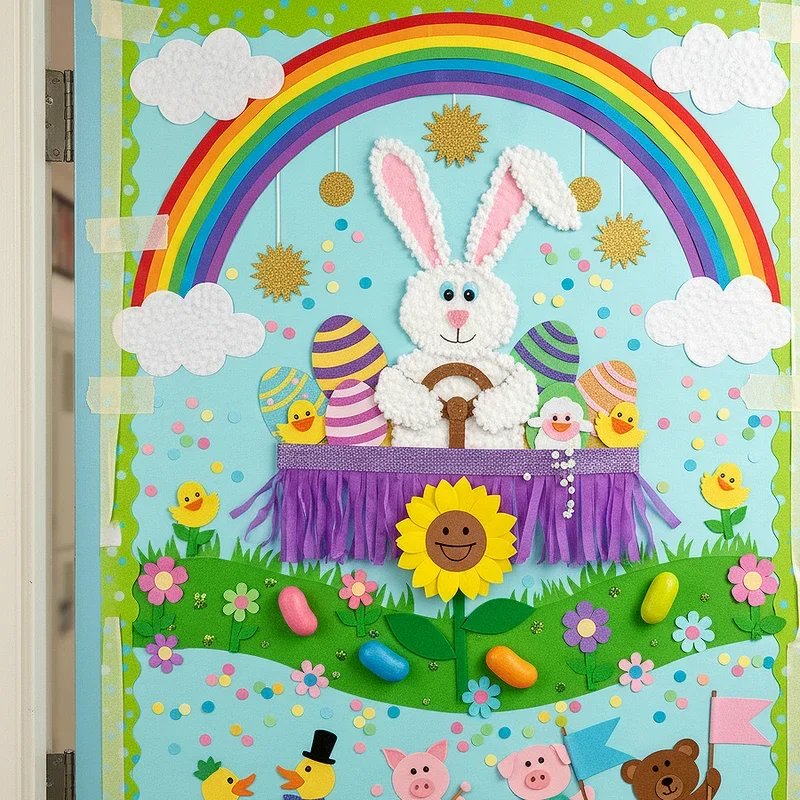
13. Easter Parade Celebration
Capture the festive energy of traditional Easter parades with a lively door display featuring dressed-up characters marching in holiday finery complete with fancy hats and spring outfits. This design celebrates the social and cultural aspects of Easter beyond religious or commercial elements, focusing on community celebration and seasonal joy. Create a lineup of characters, which might include bunnies, chicks, children, or even historical figures in Easter parade attire, all wearing elaborate bonnets decorated with flowers, ribbons, and feathers. Use bright, cheerful colors and patterns that suggest movement and celebration, perhaps positioning characters at slight angles as if stepping forward. Add festive details like musical notes, confetti, or banners announcing the parade's arrival at your classroom. Students can design their own parade participants or elaborate hats to add.
14. Woodland Creatures Gathering
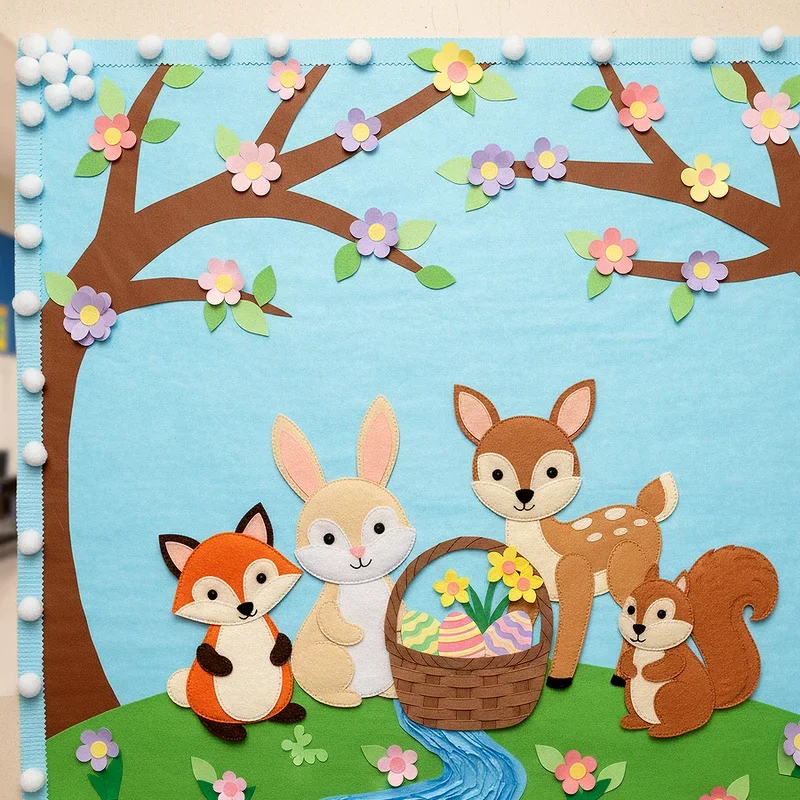
Design a serene forest scene where various woodland animals gather to celebrate spring's arrival and Easter's joy together in a natural setting. This inclusive approach moves beyond the single bunny character to celebrate biodiversity and community among creatures who share the forest habitat. Create a woodland backdrop with trees, flowers, mushrooms, and other natural elements, then populate it with rabbits, deer, squirrels, hedgehogs, birds, and other forest dwellers. Position the animals as if they're having a picnic, decorating eggs together, or simply enjoying each other's company in the spring sunshine. This design offers excellent opportunities to incorporate science content about animal habitats, species identification, or ecological relationships within forest ecosystems. The natural color palette of browns, greens, and earth tones creates a calming, organic aesthetic that emphasizes nature appreciation.
15. Interactive Countdown Calendar
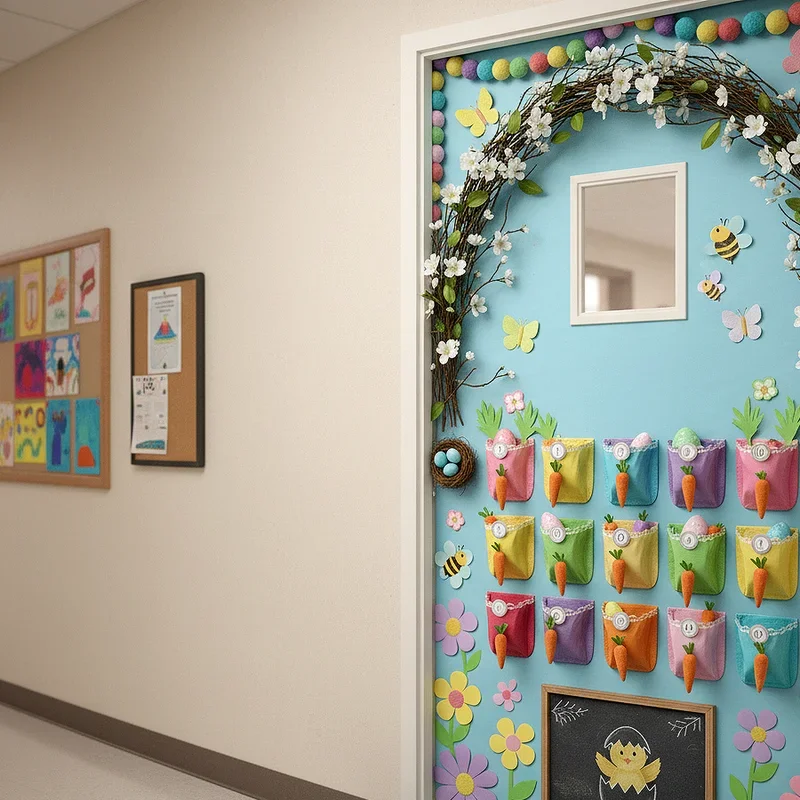
Combine decoration with daily engagement by creating an Easter countdown calendar that builds anticipation while marking time until the holiday arrives in your classroom. This functional design transforms your door into an interactive learning tool that students check each day, creating routine and excitement simultaneously. Create a large calendar grid or pathway design with numbered eggs, carrots, or stepping stones representing each day leading up to Easter. Each element can hide a small treat, activity, challenge, or message revealed daily by removing a covering or opening a flap. Consider including educational activities like math problems, writing prompts, acts of kindness, or fun facts about Easter traditions worldwide. This design maintains interest throughout the entire pre-Easter period rather than being static decoration. Students can take turns being responsible for updating the calendar each day.
Conclusion
Easter classroom door decorations offer wonderful opportunities to create welcoming, festive environments that celebrate spring's renewal and holiday joy. Whether you choose whimsical bunnies, elegant gardens, or educational themes, your decorated door becomes a source of pride and excitement for students. The fifteen ideas presented provide diverse approaches suitable for various teaching styles, budgets, and classroom philosophies, ensuring every educator can find inspiration. Remember that the best decorations reflect your unique personality and your students' interests while creating a sense of community and celebration. Don't hesitate to combine elements from multiple ideas or add your own creative twists that make the decoration distinctly yours. Most importantly, involve your students in the creation process whenever possible, transforming decoration from a task into a collaborative project.
Read next: 15 Easter Centerpiece Ideas to Brighten Your Table
Frequently Asked Questions
Q1: How long does it take to create an Easter classroom door decoration?
A: Most designs require two to four hours depending on complexity and available materials.
Q2: Can students help create Easter door decorations?
A: Absolutely, student involvement increases engagement and creates ownership of the classroom environment.
Q3: What materials work best for outdoor classroom doors?
A: Laminated paper, vinyl, and weather resistant materials prevent damage from rain and wind.
Q4: How early should I decorate my classroom door for Easter?
A: Two to three weeks before Easter allows sufficient display time without excessive preparation.
Q5: Are religious Easter themes appropriate for public school classrooms?
A: Religious themes require sensitivity; consider your community and include diverse cultural perspectives appropriately.
Stay up to date with our latest ideas!